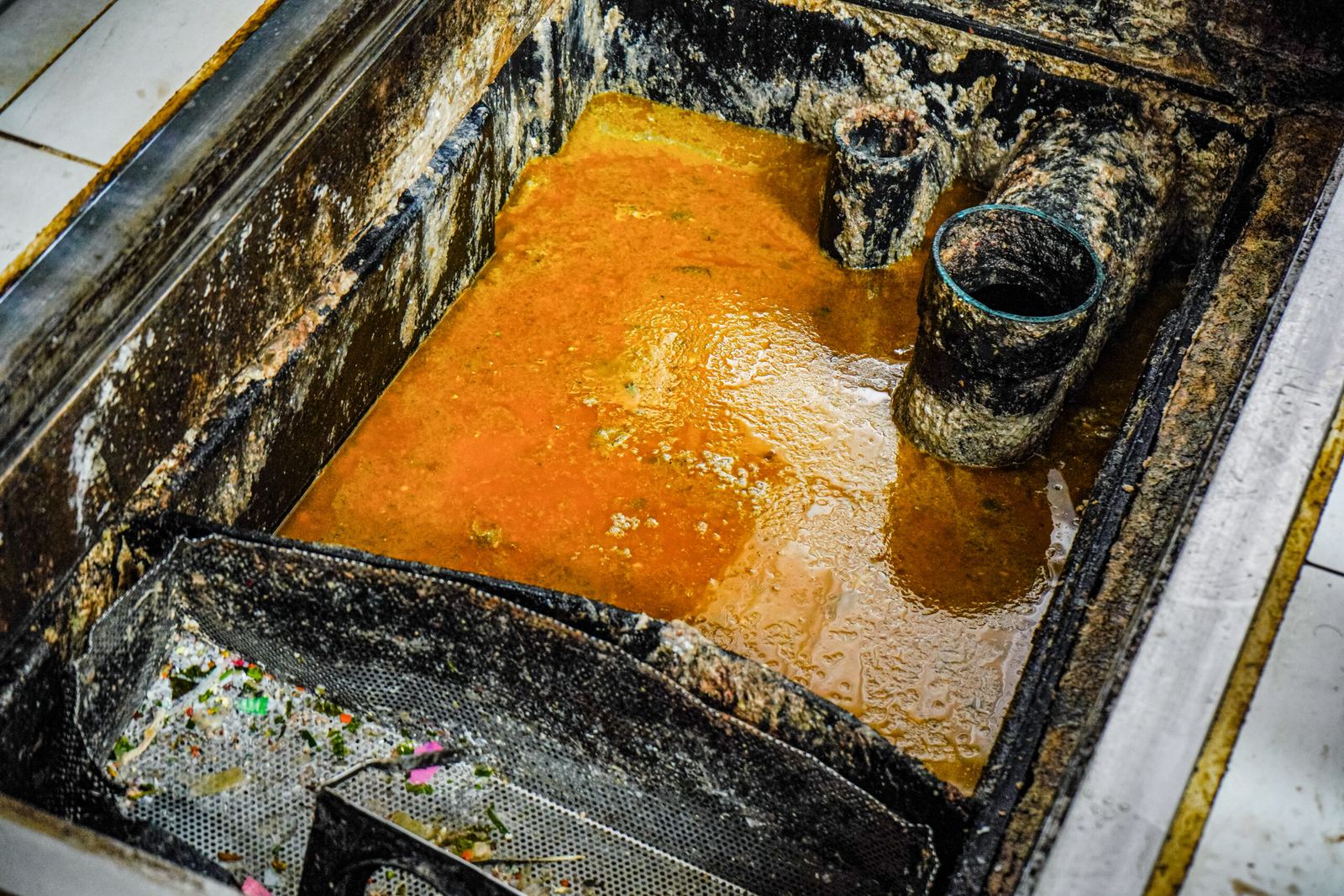
Grease Trap Cleaning Harvey IL
From the hospital campus to the fryers on Sibley Boulevard, Harvey kitchens book Grease Trap Cleaning Harvey IL facilities managers can document, because older buildings and older sewers leave little room for neglected traps. Each visit is a full pump-out, a scrape of baffles and walls, and a written service record.
Harvey is a city of about 20,000 people with a long industrial history and a commercial base spread across several corridors. Many of its food businesses occupy buildings that are decades old, and their traps often date to the original fit-out.
Servicing a basement trap in an older Harvey building
Many Harvey visits begin with a look at the route: how steep the stairs are, how low the ceiling is and how far the trap sits from the truck. The technician protects the stairwell and floor, runs the hose down and measures the grease and solids before pumping. Older units often have corroded baffles or loose lids, so the interior is scraped and inspected closely. After a clean-water refill and a check of flow at the inlet, the manager receives a record noting any parts that need attention.
MWRD and Harvey's aging collection sewers
Harvey's wastewater flows into MWRD interceptor sewers bound for the Calumet Water Reclamation Plant. The district's Sewage and Waste Control Ordinance bans discharges that cause obstructions or interfere with treatment, which puts kitchen grease squarely in scope. The City of Harvey maintains the local collection system, and much of that pipe is old enough that grease deposits narrow it quickly.
Interceptor installation is governed by the Illinois Plumbing Code, and the Cook County Department of Public Health inspects food establishments in the city. Large institutions such as hospitals and schools usually keep their own maintenance logs, and our service records slot straight into those files.
Ingalls, Sibley Boulevard and Dixie Highway
UChicago Medicine Ingalls Memorial Hospital is one of the city's largest employers, and its kitchens prepare patient meals and cafeteria food every day of the year. Thornton Township High School adds another big institutional kitchen on the academic calendar, along with the district's elementary schools.
Commercial corridors include 147th Street (Sibley Boulevard), 159th Street, Halsted Street and Dixie Highway, where chicken and fish counters, taquerias, pizza, soul food and burger chains serve local and passing traffic. The site of the old Dixie Square Mall, long a landmark on Dixie Highway, is a reminder of how much the corridor has changed, but restaurants along it remain busy.
Small carry-out kitchens on these corridors often share walls and sewer laterals with neighboring storefronts, so one overdue trap can cause a backup next door. Regular pumping protects the whole building, not just the business that owns the unit.
Crawl spaces, alleys and road salt in Harvey
Many Harvey restaurants occupy buildings with original interior traps in basements or crawl spaces. Access can mean narrow stairs, low ceilings and long hose runs, so we plan visits carefully and protect floors and walls along the route.
Winters bring heavy plowing and road salt on busy corridors like Sibley Boulevard, burying lids and corroding covers. Older laterals between the building and the interceptor are prone to grease hardening in cold weather, so routine grease trap cleaning in winter often includes checking flow at the inlet.
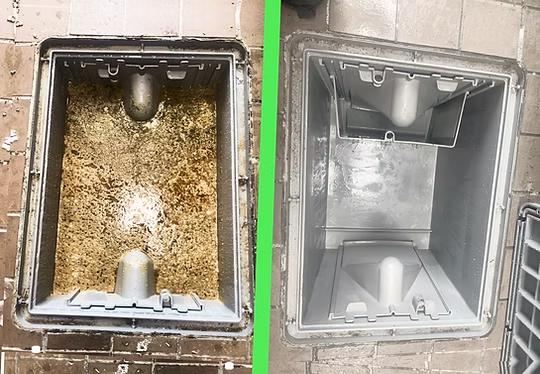
Grease Trap Pumping in Harvey
Harvey restaurants commonly use indoor traps of 20 to 50 gallons, and older buildings may still run units that are smaller than today's codes recommend. Frequent pumping compensates for that limited capacity and protects the aging city sewers downstream.
Grease Interceptor Cleaning in Harvey
Hospital and school interceptors in Harvey benefit from thorough cleaning: scraping baffles, clearing the inlet and outlet tees and inspecting the sample point. A clean interior separates FOG more efficiently during peak meal service.
Grease Interceptor Pumping in Harvey
Institutional kitchens and larger restaurants in Harvey typically rely on outdoor interceptors of 1,000 gallons or more. We remove the full contents, record layer depths and recommend an interval that fits the facility's meal volume.
Harvey on the map
Harvey lies east of Markham and north of Hazel Crest, with Sibley Boulevard and 159th Street as main east-west routes.
What Harvey kitchen managers ask us
Do Harvey hospital kitchens need special grease trap scheduling?
Hospitals cook around the clock, so we work with facilities staff to pick a recurring time between meal services. Many use a monthly or bi-monthly schedule for their main interceptor.
My Harvey restaurant has a very old trap. Should it be replaced?
Not always. Many older traps still work if they are pumped often and their baffles are intact. If we see corrosion, missing parts or a unit too small for your volume, we note it on the record.
Why do older city sewers make grease control more important?
Older pipes are rougher and often have joints or sags where grease collects. FOG that escapes a trap builds up faster in those spots, leading to backups for the whole block.
Can you reach a trap in a crawl space?
In many cases yes, if there is safe access for a technician and hose. Tell us about the space when you call so we can bring the right equipment and plan the route.
Do Thornton Township school kitchens need service over summer break?
We usually recommend a cleanout at the end of the school year and another before classes restart. Grease left in a tank over summer can harden and develop strong odors.
Is grease from taquerias different from other restaurant grease?
Not chemically, but kitchens that fry tortillas, cook with lard or prepare carnitas often produce heavy FOG loads. Those kitchens frequently need more frequent pumping than lighter-cooking restaurants.
What is the biggest grease trap mistake Harvey restaurants make?
Waiting for a backup before calling. By that point grease has usually already reached the sewer. A regular schedule based on measured layers is cheaper and safer.
Do you clean traps for churches that serve community meals?
Yes. Churches that host weekly meals or large gatherings often have small traps that fill quickly. We can schedule service after major events or on a fixed cycle.
How does road salt affect interceptor lids in Harvey?
Salt accelerates corrosion on cast-iron covers and concrete collars. Over a few winters lids may loosen, crack or rock. We record damage so it can be fixed before it becomes a hazard.
What records should a Harvey business keep after each visit?
Keep the dated service record showing gallons removed, layer depths and unit condition. Inspectors and city staff can ask to see recent records, especially after a sewer problem nearby.
Can a full trap cause a health inspection problem?
Yes. Backed-up floor drains, odors and standing water near prep areas can all lead to violations. Keeping the trap pumped on schedule prevents those issues.
Do you service traps along Dixie Highway and Halsted Street?
Yes. We serve restaurants, gas stations and institutions on every main corridor in Harvey, including Dixie Highway, Halsted Street, 159th Street and Sibley Boulevard.
Grease trap service around Harvey
Kitchens close to Harvey are on the same service routes: