Grease Trap Cleaning Markham IL
Fast-food counters on 159th Street and lunch spots near the courthouse need Grease Trap Cleaning Markham IL operators can schedule around tight service windows, and that is where most of our work in the city happens. Every visit includes a full pump-out, a scrape of the internal baffles and a written log of what was removed.
Markham is a city of about 11,000 people with a large share of its land in commercial and light industrial use. That means plenty of quick-serve kitchens, gas station food counters and break rooms, many of them serving drivers coming off Interstate 57 and the Tri-State.
A drive-thru interceptor pump-out on 159th Street, step by step
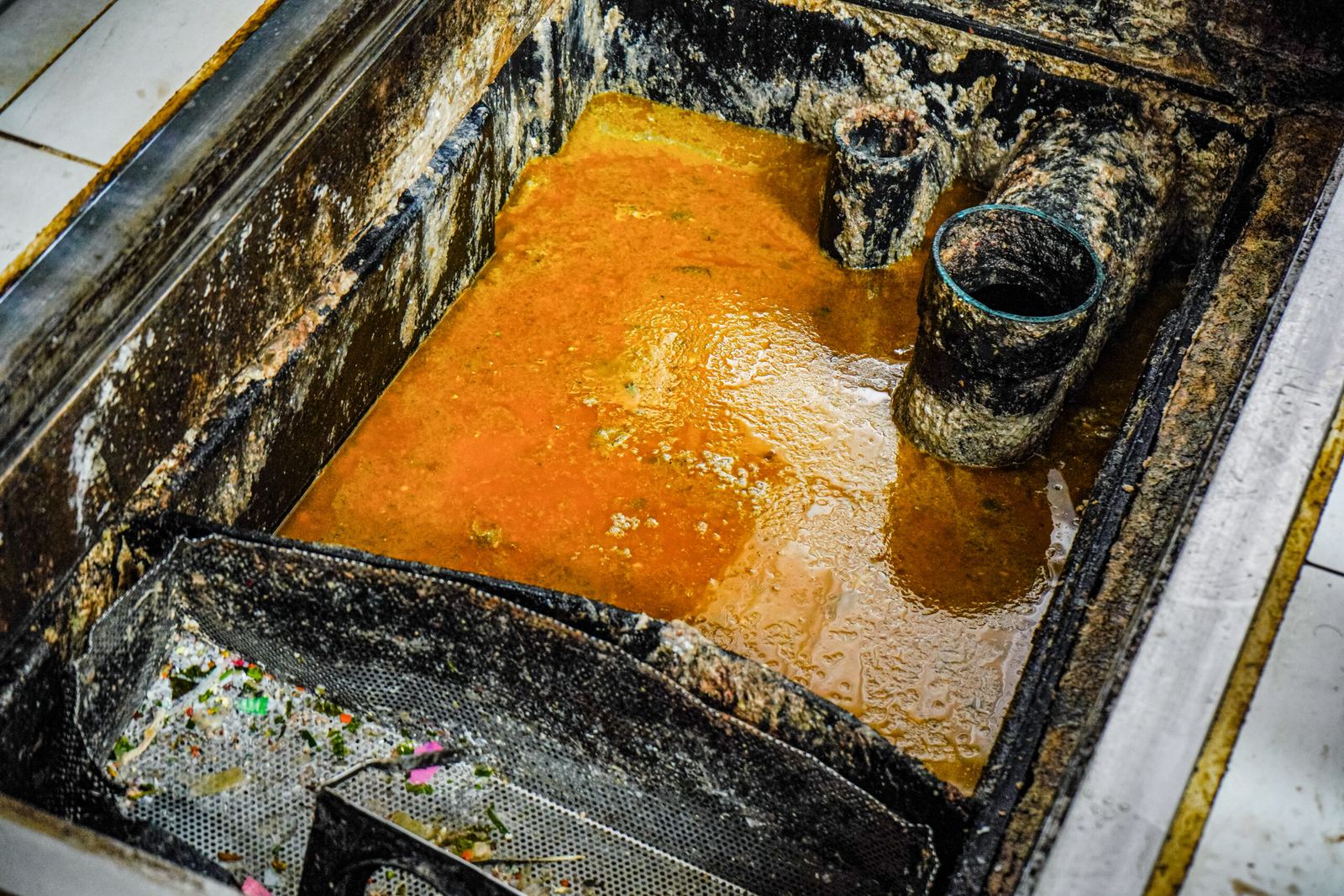
Most corridor jobs start well before the breakfast window. The truck parks on the far side of the lot, cones go around the lid in the drive-thru lane, and the technician lifts the cover and measures the grease and solids layers. The tank is vacuumed to the bottom, the baffles and walls are scraped, and the inlet and outlet tees are cleared. After a refill with clean water, the lid is reseated, the cones come up and the lane is open again before the first car arrives. The manager gets a dated record on the way out.
MWRD rules and Markham's city sewers
Wastewater from Markham flows through MWRD interceptor sewers to the Calumet Water Reclamation Plant. The district's Sewage and Waste Control Ordinance prohibits discharges that block sewers or interfere with treatment, and FOG from commercial kitchens is one of the leading causes of both. The City of Markham maintains the local sewers that carry flow from your building to the MWRD lines.
Interceptor design must meet the Illinois Plumbing Code, and the Cook County Department of Public Health handles food establishment inspections. When a city crew traces a recurring backup on 159th Street to a single lateral, a dated service record from your last pump-out is the fastest way to show the source is under control.
159th Street, Kedzie Avenue and the courthouse lunch trade
The Cook County Sixth Municipal District courthouse on Kedzie Avenue draws hundreds of people on weekdays, and the restaurants around it see heavy lunch traffic followed by quiet evenings. That stop-and-start pattern is hard on traps because grease arrives in a single surge rather than spread across the day.
159th Street (U.S. Route 6) is the city's main commercial corridor, lined with chicken and fish spots, burger chains, pizza, Mexican kitchens and convenience stores with hot food. Toward the west, warehouses and trucking firms near Interstate 57 run employee cafeterias and break rooms, and churches across the city keep full kitchens for fellowship meals.
Because so many of these businesses run long hours with small staffs, grease trap cleaning tends to slip until a drain slows. A fixed schedule removes that guesswork and keeps city crews out of your manhole.
Drive-thru lids, semi traffic and Markham snow
Many 159th Street lots are small, and the interceptor lid often sits right in the drive-thru lane or next to the dumpster enclosure. We schedule those visits before opening so the truck can park without blocking customers or semi traffic on the corridor.
Winter is the other variable. Lots are plowed fast and piled high, and lids end up under compacted snow and salt. Grease also hardens in cold lateral lines between the building and the interceptor, so we check flow at the inlet as well as the outlet whenever temperatures stay below freezing.
Grease Trap Pumping in Markham
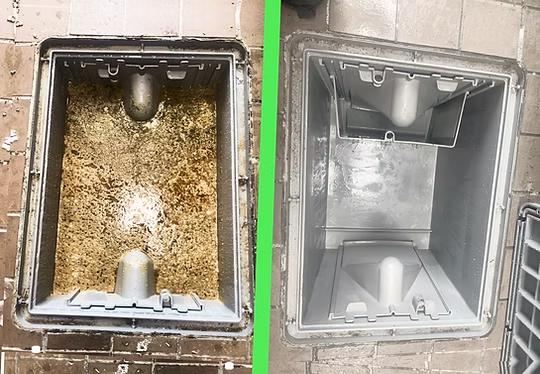
Quick-serve kitchens along 159th Street often have indoor traps in the 25 to 50 gallon range. Because fryers run all day, those units can reach capacity within weeks. Full pumping restores the volume the unit was designed for and prevents grease from carrying past the outlet into city sewers.
Grease Interceptor Cleaning in Markham
Interceptor cleaning in Markham means scraping baffles and walls, flushing the inlet and outlet tees and confirming the sample port is clear. For courthouse-area restaurants with surge lunches, a clean interior separates grease far more effectively during that busy hour.
Grease Interceptor Pumping in Markham
Truck stops, cafeterias and larger chains in Markham commonly use outdoor interceptors holding 750 to 2,000 gallons. We empty the full contents, record grease and solids depth and recommend an interval based on how quickly the layers build.
Where we work in Markham
Markham lies between Interstate 57 and the Tri-State, with 159th Street running east to west through the city.
What Markham fast-food managers ask us
Who maintains the sewer lines behind my Markham restaurant?
The City of Markham maintains local collection sewers, which then feed MWRD interceptors leading to the Calumet Water Reclamation Plant. Your building lateral, including the trap, remains the owner's responsibility.
Can you pump the interceptor without blocking my drive-thru on 159th Street?
Yes. We plan most corridor visits for the hours before opening, position the truck on the side of the lot away from the lane and finish before the first breakfast orders.
Do restaurants near the Markham courthouse need special scheduling?
Usually just an early or mid-afternoon slot. Lunch traffic is heavy on court days, so we avoid the late morning rush and clean right after the crowd thins out.
My gas station sells fried chicken. Do I need a grease trap?
If you fry food and wash pans on site, plumbing rules generally require a grease interceptor on those fixtures. We can pump and inspect the unit you have and tell you if it appears undersized for your volume.
How do cold winters affect my Markham grease trap?
Cold slows separation and hardens grease in the line before the trap. Units serviced in January often show thicker crusts than the same unit in July, which is why some owners shorten the interval in winter.
Do you handle employee cafeterias at warehouses near I-57?
Yes. Warehouse and trucking cafeterias often have mid-sized interceptors that are easy to forget because no customers see them. A set quarterly date keeps them from turning into an emergency.
What is the brown, foamy layer at the top of my trap?
That is the floating FOG cap, usually mixed with food particles. Underneath is a clearer water layer, and at the bottom sits a solids layer. All three are removed during a full pump-out.
Why did my Markham kitchen fail a recent inspection over the grease trap?
Common reasons are no service record, a unit filled well past its working capacity, or a missing or broken baffle. Pumping, a written record and repairs to damaged parts address the usual findings.
Can I just dump used fryer oil into the trap?
No. Fryer oil belongs in a rendering container for collection. Pouring it into a trap fills the unit almost immediately and sends liquid grease into city and MWRD sewers.
How deep can grease build up before the unit stops working?
Once grease and solids together occupy around a quarter of the liquid depth, separation suffers and grease begins to escape. We measure both layers on each visit and note them on your service log.
Do you clean traps at churches in Markham?
Yes. Church kitchens that host fellowship dinners or funeral repasts can fill a small trap in a single weekend. We often schedule them right after big events so the unit is clear for the next one.
Is there anything I can do to lower my service costs?
Strain sinks, scrape plates into the trash and train staff to keep oil out of drains. Less fat entering the trap means a longer interval between visits, which lowers your annual cost.
Kitchens we serve around Markham
Kitchens close to Markham are on the same service routes: