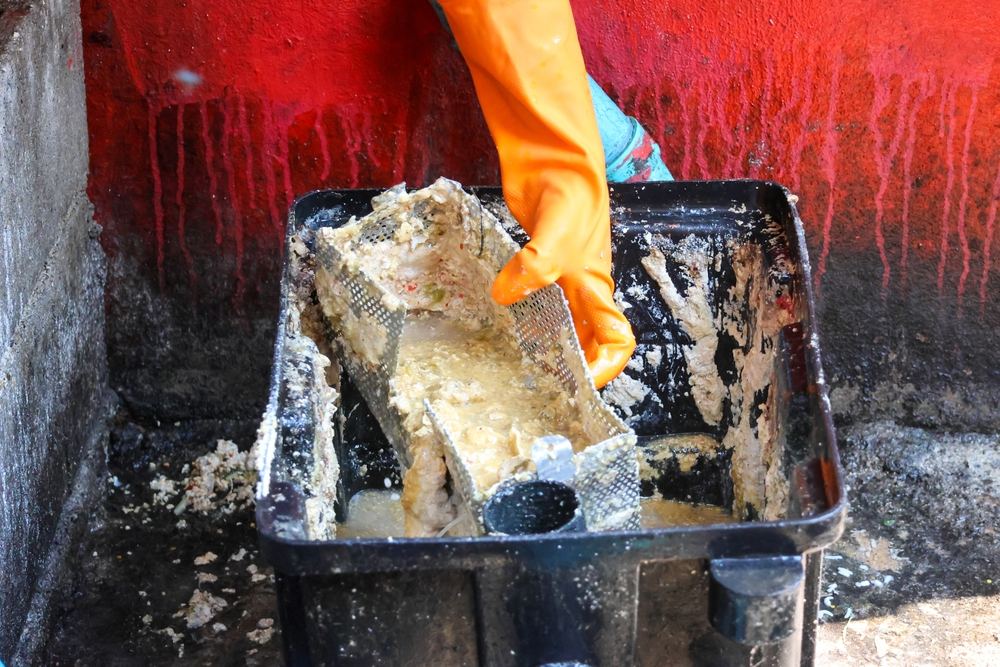
Grease Trap Cleaning Homewood IL
Restaurants from downtown Ridge Road to the Halsted Street strip book Grease Trap Cleaning Homewood IL inspectors and landlords both accept, because a properly pumped and scraped trap is the cheapest insurance against a backup on a Friday night. We remove everything from the unit, clean the internal walls and leave a record of what came out.
Homewood has around 19,000 residents and a busier dining scene than many neighbors, thanks to its walkable downtown and the Metra and Amtrak station at its center. That mix of sit-down restaurants, bakeries and highway chains means trap sizes vary a lot from one block to the next.
What a grease trap visit looks like in a Homewood kitchen
Downtown visits usually begin before the restaurant opens. The truck parks in the alley behind the storefront, and the hose runs through the back door and down the basement stairs over floor protection. The technician measures the grease cap and solids, pumps the unit dry, scrapes the baffles and clears both tees. The trap is refilled with clean water and the lid is resealed. Halsted Street interceptors follow the same steps from the parking lot instead of a basement, and both end with a written record left with the manager.
Thorn Creek Basin Sanitary District rules for Homewood restaurants
Homewood is one of the few villages on this side of the Tri-State that does not drain to the MWRD. In 1983 the Thorn Creek Basin Sanitary District annexed the village, connected its sewers to the district's main plant in Chicago Heights, and took over the old Homewood treatment plant as an excess flow facility. Thorn Creek runs the trunk and interceptor sewers; the village maintains the local collection system that your kitchen lateral ties into.
That arrangement matters for owners. A grease blockage in a village main brings out Homewood public works, while pretreatment expectations come from the sanitary district. Interceptor installation still follows the Illinois Plumbing Code, and the Cook County Department of Public Health inspects food establishments. Keeping regular service records covers you with all three.
Downtown Ridge Road, Halsted Street and Dixie Highway kitchens
Downtown Homewood, centered on Ridge Road and Martin Avenue near the train station, is full of older storefronts holding cafes, bakeries, pubs and sit-down restaurants. Many of these buildings were converted to food use decades after construction, so traps are often tucked in basements or under prep sinks rather than in a tidy outdoor vault.
Halsted Street (Illinois Route 1) is the opposite: chain restaurants, drive-thrus and big-box food counters with outdoor interceptors near the Interstate 80 interchange. Dixie Highway adds family diners, pizza and Mexican kitchens, and the village's schools and senior residences round out the list. Each group needs a different schedule, so we start with a measurement rather than a guess.
For downtown owners, grease trap cleaning on a fixed calendar is the easiest way to stay ahead of the holiday rush, when bakeries and banquet rooms push far more fat through small units than in summer.
Basement traps, narrow alleys and Homewood winters
Downtown alleys are narrow and parking is metered, so we plan truck placement and hose runs before the visit. Basement traps mean longer hoses and careful protection of stairwells and floors. Along Halsted, interceptor lids in busy lots are often plowed under after a snowfall, and salt corrodes the cast-iron rims over a few winters.
Low ground near Butterfield Creek stays wet in spring, and freeze-thaw cycles can shift risers enough to let groundwater seep into a tank. When we see standing water above the normal operating level, we note it on the record so the owner can fix the seal before it dilutes the grease layer.
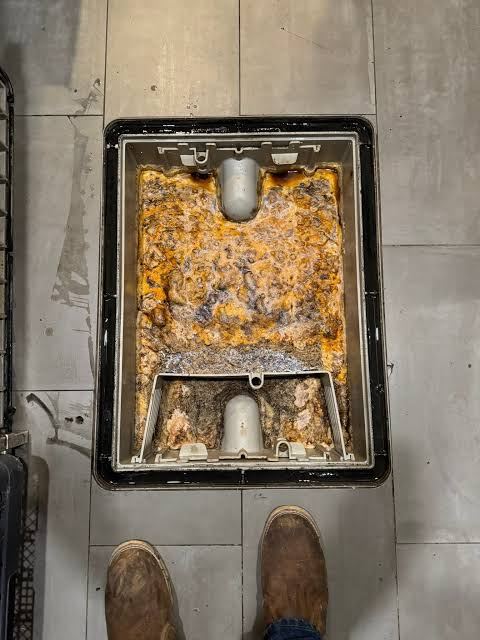
Grease Trap Pumping in Homewood
Many downtown Homewood kitchens rely on indoor traps between 20 and 40 gallons. Busy bakeries and fryers can fill those in a few weeks, so pumping is about frequency more than volume. We vacuum the whole unit, not just the floating layer, to restore its full capacity.
Grease Interceptor Cleaning in Homewood
Interceptor cleaning for Halsted Street chains includes scraping baffles, clearing the inlet and outlet tees and checking the sample box. Removing the hard crust on the walls gives Thorn Creek's trunk sewers a much cleaner discharge and helps the unit pass inspection.
Grease Interceptor Pumping in Homewood
Larger Homewood interceptors behind drive-thrus and banquet rooms commonly hold 1,000 gallons or more. A vacuum truck empties the full tank in one pass, and we log gallons and layer depths so you can see how fast it refills between visits.
Homewood service map
Homewood stretches from Interstate 80 south toward Chicago Heights, with downtown around Ridge Road and the train station.
Questions Homewood restaurant owners ask
Does Homewood follow MWRD grease rules or someone else's?
Homewood drains to the Thorn Creek Basin Sanitary District, which has treated the village's wastewater since 1983. The village maintains the local mains, so both bodies have an interest in keeping grease out of the sewer.
My downtown Homewood restaurant has a trap in the basement. Can you reach it?
Yes. Basement traps are common in older Ridge Road buildings. We run hoses down the stairwell, protect floors and doorways, and keep the truck positioned so it does not block the alley for neighboring shops.
How soon can a Halsted Street drive-thru be serviced?
Most drive-thru interceptors can be pumped in the early morning before the first rush. Tell us when your lanes open and we will plan the truck position so customers are never routed around the hose.
Why does my Homewood bakery trap fill so quickly?
Butter, shortening and batter rinse water carry a surprising amount of fat. Bakeries frequently need monthly service on small indoor units, especially in the weeks leading up to the holidays.
Is the old Homewood treatment plant still used?
Thorn Creek Basin Sanitary District took over the former plant and uses it as an excess flow facility during heavy rain. Day-to-day treatment happens at the district's main plant in Chicago Heights.
Who do I call if grease backs up into the street sewer?
Contact Homewood public works for the public main and call us to service your trap right away. A pumped unit and a dated record show the village that you have dealt with the source.
Can you clean a shared interceptor serving several downtown tenants?
Yes, and we can provide a single record the landlord can share with each tenant. Shared units fill faster than any one tenant expects, so a fixed schedule usually works better than waiting for complaints.
What size interceptors do Homewood chain restaurants typically have?
Outdoor units behind chain restaurants near Interstate 80 often hold between 1,000 and 1,500 gallons. Smaller cafes downtown more often use indoor hydromechanical traps under 50 gallons.
Can rain or snowmelt get into my interceptor?
It can if a riser has shifted or a lid seal has failed. Extra water pushes grease toward the outlet before it separates. We note signs of inflow on the record so the seal can be repaired.
Do Homewood schools and senior residences need the same schedule as restaurants?
Not usually. Institutional kitchens tend to be steady but lighter on frying. Many end up on a quarterly cycle, with an extra visit after the end-of-year events or holiday meals.
Will a pump-out disturb diners on Ridge Road?
We schedule downtown visits before opening or after close whenever possible. The vacuum truck is the loudest part, so timing matters more than anything else for restaurants with patio seating.
What should staff do between visits to protect the trap?
Scrape plates into the trash, keep fryer oil out of sinks, use strainers on floor drains and never pour hot water to push a clog. Those habits can stretch the time between pump-outs noticeably.
Grease trap service near Homewood
Kitchens close to Homewood are on the same service routes: