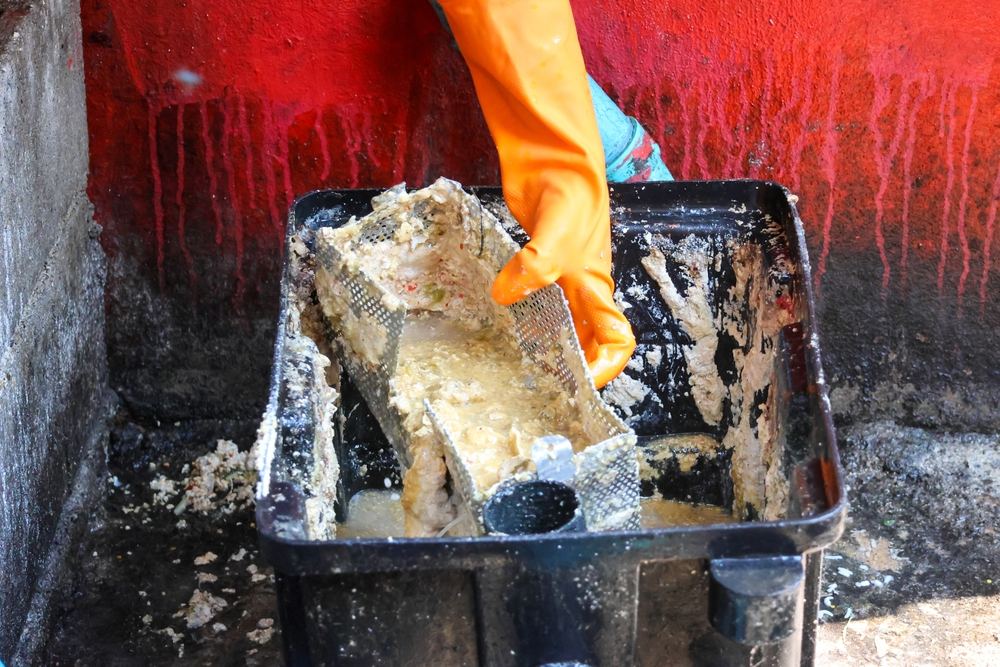
Grease Trap Cleaning Olympia Fields IL
The hospital on Crawford Avenue and the clubhouse kitchens nearby depend on Grease Trap Cleaning Olympia Fields IL staff can schedule around events, surgeries and meal service. We empty each unit completely, scrape it clean and provide a dated record for facility files.
Olympia Fields is a village of about 5,000 residents, largely residential with wooded lots and winding streets. Its commercial kitchens are few but large, which means fewer visits per year overall but much bigger interceptors per visit.
How a hospital interceptor visit runs in Olympia Fields
Hospital jobs are set up with facilities staff in advance, usually on a recurring date between meal services. The truck uses the service drive, away from patient entrances and ambulance routes. The technician measures the grease and solids layers in the large outdoor interceptor, vacuums the full tank, scrapes the baffles and clears the tees. After a clean-water refill and a lid and riser check, a detailed record goes to the facilities team for the hospital's maintenance log.
MWRD rules for Olympia Fields' wooded sewer lines
Wastewater from Olympia Fields enters the MWRD system for treatment. The district's Sewage and Waste Control Ordinance forbids discharges that block sewers or interfere with treatment, and commercial FOG is among the most common problems. The village maintains its local collection sewers, many of which run through wooded, lightly developed areas where access for repairs is difficult.
Interceptor sizing follows the Illinois Plumbing Code, and the Cook County Department of Public Health handles food establishment inspections. Large institutions here tend to keep detailed maintenance records, and our service logs are designed to fit straight into them.
Franciscan Health, the country club and Lincoln Highway
Franciscan Health Olympia Fields runs kitchens for patients, staff and visitors every day. Nearby medical office buildings host cafes and catering prep areas. These institutional kitchens use large interceptors and need a predictable schedule that never interferes with patient care.
Olympia Fields Country Club, which has hosted major championships including the U.S. Open, runs banquet and dining kitchens that surge during the golf season and private events. Restaurants and carry-out kitchens along Lincoln Highway (U.S. Route 30), Western Avenue and Governors Highway round out the commercial mix near the Metra Electric station.
Most of these kitchens follow very different calendars. The hospital runs every day of the year, the club runs hard in summer and the smaller restaurants follow commuter and weekend traffic. Grease trap cleaning has to fit each pattern, which is why we measure layers at every visit and adjust intervals instead of using one schedule for the whole village.
Long service drives and golf-season surges
Many Olympia Fields interceptors sit at the end of long service drives or behind landscaped grounds. We keep trucks on paved surfaces, lay hoses along walkways and protect turf and planting beds around the work area.
Demand swings with the seasons. Club kitchens peak in summer, while the hospital stays steady all year. Grease trap cleaning for the club often moves to a shorter cycle in tournament months, and winter visits include clearing ice from lids and checking for frost heave.
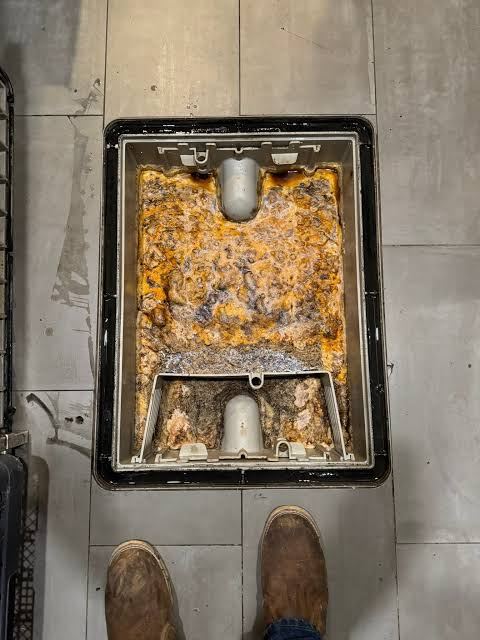
Grease Trap Pumping in Olympia Fields
Smaller cafes in Olympia Fields medical buildings often use indoor traps of 20 to 40 gallons. These fill steadily with coffee, dairy and light cooking residues and need pumping every one to three months depending on volume.
Grease Interceptor Cleaning in Olympia Fields
Hospital and club interceptors receive thorough cleaning: scraping baffles and walls, clearing both tees and checking the sample point. That level of cleaning helps large units separate FOG reliably during banquets or full patient-meal service.
Grease Interceptor Pumping in Olympia Fields
The largest kitchens in Olympia Fields use outdoor interceptors of 1,500 gallons or more. We remove the entire contents, record gallons and layer depths and set a schedule that matches seasonal and institutional demand.
Olympia Fields service map
Olympia Fields sits south of Flossmoor and west of Chicago Heights, along Lincoln Highway and the Metra Electric line.
Questions from Olympia Fields facilities teams
How do you schedule interceptor service at a hospital in Olympia Fields?
We coordinate with facilities managers to choose a recurring time that avoids meal peaks and patient transport routes. Many hospitals prefer a set monthly or bi-monthly date.
Do country club kitchens need more service during golf season?
Yes. Banquets, outings and member dining all peak in summer. Many clubs shorten the interval between visits from May through September and lengthen it in winter.
Can you work around a major tournament or private event?
We schedule around event calendars, servicing the interceptor just before the busiest period and again afterward. That keeps the unit clear when demand is highest.
What size interceptors do Olympia Fields institutions use?
Hospitals and large clubs often have outdoor units of 1,500 gallons or more. Smaller cafes in medical buildings typically use indoor traps under 50 gallons.
How do you protect landscaped grounds during service?
We keep trucks on paved roads, run hoses along walkways and use mats where needed. Grounds staff can flag sensitive areas before we begin.
Can grease from a medical building cafe really cause problems?
Yes. Even light cooking, dairy and coffee residues build up over time. Without regular pumping, small traps can clog and send grease into village sewers.
What does the village do if grease blocks a sewer line?
Village crews clear the main and look for the source. A recent service record from your trap or interceptor helps show your business is maintaining its equipment.
Why does my club interceptor smell more in summer?
Heat speeds up decomposition of grease and food solids, releasing stronger odors. Pumping more often during warm months and checking the lid seal usually solves the problem.
Is a hospital kitchen grease trap different from a restaurant's?
The equipment is similar, but hospitals often have larger units and stricter documentation needs. We provide detailed records that fit into facility maintenance logs.
Can restaurants on Lincoln Highway share an interceptor?
Some plazas use shared units. We can service shared interceptors and give the property manager one record to distribute among tenants.
How long does it take to pump a large club interceptor?
A 1,500-gallon unit with normal buildup usually takes one to two hours, including scraping and inspection. Heavier buildup or difficult access can add time.
Do you clean traps for catering kitchens in Olympia Fields?
Yes. Catering prep kitchens often have busy weekends followed by quiet weekdays. We schedule service after big events so the trap is clear for the next one.
Serving kitchens near Olympia Fields
Kitchens close to Olympia Fields are on the same service routes: